Blog

Always brush towards to heart to stimulate circulation How to Practice Daily Dry Skin Brushing To Detox Lymph Dry skin brushing means to brush the skin when it’s dry. Brushing the skin in the shower is wet skin brushing. Using a loofa in the shower will not give the same effect because once the skin cells are wet, you’re essentially pushing all the dead skin cells around over the surface of your skin. Dry skin brushing adds just the right …

Sanskrit: a dead language in the living world By Nidhi Arora https://www.instagram.com/headsupchindown/ “It is a dead language, kind of like Latin,” shared software professional John DiFelice from Elkins Park, US. I had asked him what he knew about Sanskrit. He went on to say that he heard the Indian scriptures were written in Sanskrit and people in India recite mantras in Sanskrit as part of daily rituals and meditations, but that it is no longer a widely spoken language. When …
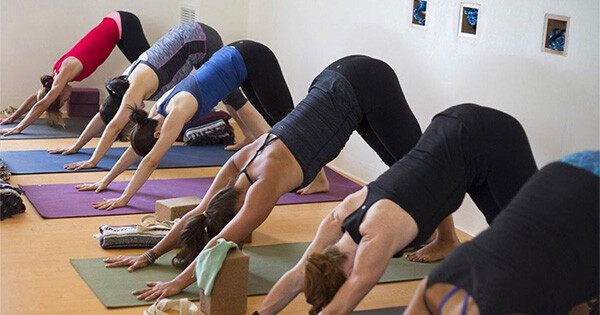
by Nidhi Arora ~ connect with her here As Bhagwad Gita says, “There are as many yogas as there are people.” And as i say, “There are as many yogas as there are countries.” Being an Indian, I can be biased towards practices that are taught in different parts of the world in the name of yoga. I came across the term Hot Yoga in 2013 when I moved to the United States from India. I was searching online for …

Understanding the Basics of Breathing and Respiration Breathing involves the passage of air in and out of the lungs, and respiration involves the process of gas exchange between the lungs and the blood.1 During inspiration, the diaphragm contracts, the abdomen moves down, while the ribs expand and oxygen moves into the lungs.1 On expiration, the diaphragm relaxes, the abdomen rises, the ribs move inward and carbon dioxide moves out of the body.1 For the most part, the control of the …
The Goal of Pranayama One of the main goals of pranayama is to prepare the body for deep meditation, by withdrawing the senses form the outside world1. However, the effects of pranayama can be altered according to the desired result, via the influence of the breath on the physiology of the body. Thus, one can learn to consciously control the breath to create feelings of relaxation or increased energy. Pranayama can be practiced in isolation or in conjunction with asana …
“Prana is the divine force of all function in the body.” Hello beautiful soul, I salute you from the most divine part of me to the most divine part of you. Together, we will be progressing through a series of articles dedicated to the topic of pranayama, one of my favorite topics and of extreme importance. It is my pleasure to share this collective research and my personal experiences with you. And so the journey begins … What is Pranayama …
Chapter 1 – Concentration/Samadhi Pada – Part 18 Gaining Knowledge – Higher Truths, cont. – Yoga Sutras (1.49-1.51) Overview: Most knowledge is commingled with words or other concepts, and thus the knowledge of the object is not really pure knowledge. This is the nature of most of our experiences. Like other experiences, Samadhi, or deep absorption leaves its impressions in the mind field. Like other impressions, these impressions also cause their subsequent effects. On the path of Self-realization, you systematically …

Chapter 1 – Concentration/Samadhi Pada – Part 17 Gaining Knowledge of Higher Truths – Yoga Sutras (1.47-1.48) Overview: When the modifications of the mind are weakened, the mind is purified and takes on a crystal-like quality, as was previously explained (Sutra 1.41). However, Sutra 1.47 is explaining that after there is mastery of the nirvichara (subtle) engrossment (Sutra 1.44), there comes an even greater level of purity and luminosity. Along with the purity and luminosity mentioned in Sutra 1.47, there …

Chapter 1 – Concentration/Samadhi Pada – Part 16 Types of Engrossments, cont. – Yoga Sutras (1.44-1.46) Overview: Savichara and Nirvitarka Samadhis (engrossments) are similar the two previous Samadhis, except they are more subtle. The objects can be so subtle that they are undefinable by words. All these Samadhis are with seed, which means that they are not yet completely free from conditioned thoughts and cannot be sustained indefinitely. On to the sutras … Yoga Sutra (1.44) – etaya eva savichara …

Chapter 1 – Concentration/Samadhi Pada – Part 15 Types of Engrossments – Yoga Sutras (1.42-1.43) Overview: When the mind becomes concentrated and the extraneous thought patterns begin to subside (as a result of the persistent practice of one-pointed meditation), the mind can then be not only concentrated, but also more thoroughly engrossed in the object of meditation. It is a sort of inner expansion of attention on the object of meditation, and that engrossment is called samapattih. Now the sutras …

Chapter 1 – Concentration/Samadhi Pada – Part 14 After the Mind is Stable – Yoga Sutras (1.40-1.41) Overview: Once the mind has been reasonably stabilized and clear (see yoga sutras 1.33-1.39), the process of Yoga can begin to deepen further. Once the deeper stages are reached the mind then becomes like a transparent crystal (sutra 1.41) and is now a purified tool ready for the subtler explorations of both the gross and subtle levels. A mind so trained and controlled …

Chapter 1 – Concentration/Samadhi Pada – Part 13 Stabilizing/Clearing the Mind, cont. – (Yoga Sutras 1.36-1.39) Overview: The previous two sutras (1.34 & 1.35 – see pt. 12) were the 1st and 2nd of five specific “concentrations” that Patanjali recommended for stabilizing the mind. And we were reminded to become aware of the actual sensing itself, not merely the objects. This applies also to the next three sutras (1.36 – 38) and to the next (1.39) which is not specified …

Chapter 1 – Concentration/Samadhi Pada – Part 12 Stabilizing/Clearing the Mind – Yoga Sutras (1.33-1.35) Overview: Many teachers of meditation emphasize only one method. Concentrating on the breath is just one example. Some focus on a specific center in the body (chakra) or fixed gazing on some visual object (trataka) as outlined in sutras 1.33 – 1.39. While these and other methods are extremely useful, it is good to keep in mind that they are limited in their results. They …

We have all heard that we should always do what makes us happy or brings us joy. We have an idea that what we do is related to some special dream. We believe that we will achieve or accomplish happiness and joy with a lot of work, perseverance, and effort. The truth is that we need to be reminded that we can find joy in almost everything we do. It’s in every little detail or aspect of our daily routine. …
Chapter 1 – Concentration/Samadhi Pada – Part 11 Obstacles & Solutions – Yoga Sutras (1.30-1.32) Overview: As your practice evolves obstacles are to be expected. Yoga sutra 1.30 lists nine predictable obstacles that arise on your inner journey, and sutra 1.31 mentions four consequences that grow out of these obstacles. Although the serious student may feel challenged as these obstacles (and their consequences) arise, they can take a degree of comfort in Patanjali’s assurance that they are perfectly natural and …
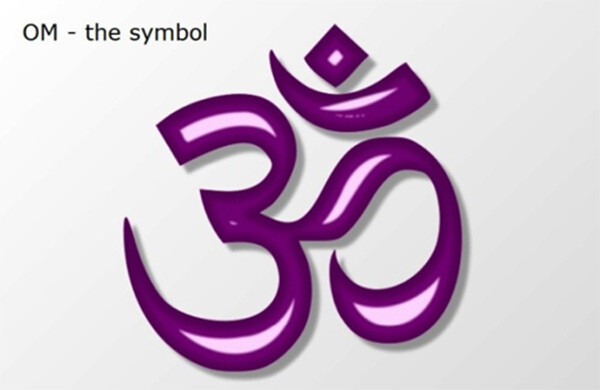
Chapter 1 – Concentration/Samadhi Pada – Part 10 Samadhi Attained by Devotion, cont. – Yoga Sutras (1.25-1.29) This practice takes the student on a direct route inward, systematically penetrating each level of consciousness. Here it will be shown how Ishvara is represented and invoked by OM and how consciousness contains the seed of omniscience which is the very source of the teachings from all the ancient sages. These next sutras remind us that the sound of OM needs to be …
Chapter 1 – Concentration/Samadhi Pada – Part 9 Samadhi Attained by Devotion – Yoga Sutras (1.23-1.24) Patanjali uses the next few sutras to focus on the concept of Ishvara in the framework of yoga. Early writings often used Ishvara to mean “master.” A yogesvara was therefore a “master of yoga.” Ishvara is derived from the root, meaning to rule or to own. It is translated by many modern commentators with terms such as Supreme God, Lord, and Divine (with form). …

Chapter 1 – Concentration/Samadhi Pada – Part 8 Effort & Commitment, cont. – Yoga Sutras (1.21 – 1.22) These two sutras (1.21 and 1.22) discuss the levels of intensity applied to actual practice and commitment to the goal. This way each person can progress at their own rate and still have a direct experience. Remaining aware throughout your practice is extremely useful and great freedom results from that awareness. Yoga Sutra (1.21) – tivra samvega asannah. Tivra means fast, intense; …

Chapter 1 – Concentration/Samadhi Pada – Part 7 Effort & Commitment – Yoga Sutras (1.19 – 1.20) Yoga Sutras 1.19 and 1.20 describe two kinds or types of aspirants, both of whom can attain the goals of Yoga: Advanced, born with true insight: These aspirants are those who have made tremendous advancement in previous lives and find Samadhi easy to attain (1.19). Others: Most of those that aspire to be yogis are of this type, which means following the five …
Chapter 1 – Concentration/Samadhi Pada – Part 7 Effort & Commitment – Yoga Sutras (1.19 – 1.20) Yoga Sutras 1.19 and 1.20 describe two kinds or types of aspirants, both of whom can attain the goals of Yoga: Advanced, born with true insight: These aspirants are those who have made tremendous advancement in previous lives and find Samadhi easy to attain (1.19). Others: Most of those that aspire to be yogis are of this type, which means following the five …

Chapter 1 – Concentration/Samadhi Pada – Part 6 Types of Concentration – Sutras (1.17 – 1.18) These two Yoga Sutras describe the entire process of Samadhi, the higher tool of meditation. Therefore, the whole process of yoga is summarized in these two and the preceding sutras. It reviews how the meditator systematically moves inward. First by continuing through four levels (or stages) of concentration on an object, and then progressing to the stage of objectless concentration. The remaining Yoga Sutras …
Chapter 1 – Concentration/Samadhi Pada – Part 5 Practice & Non-Attachment, cont. – Yoga Sutras (1.15 thru 1.16) These two sutras cover non-attachment and supreme non-attachment. While the principle applies to all the gross and subtle levels, a gross level example will help. A good example of this is two smokers … Imagine two people who quit smoking many years ago. One is still attached to cigarettes, and when he sees a cigarette, the craving begins. When he resists acting …
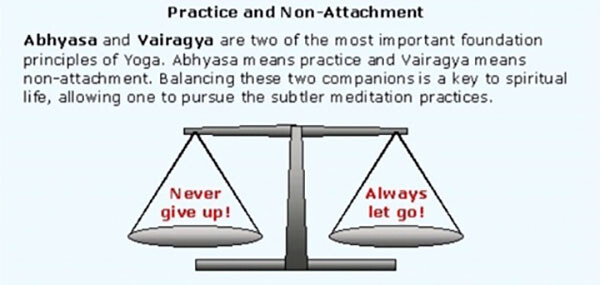
Chapter 1 – Concentration/Samadhi Pada – Part 4 Practice & Non-Attachment – Yoga Sutras (1.12 thru 1.14) Practice (abhyasa) and non-attachment (vairagya) are the two foundational principles on which the entire system of Yoga rests. Through the cultivation of these two principles, all other Yoga practices evolve and eventually mastery over the mind field (chitta/citta) occurs and allows the realization of the true Self (Atman). Regular practice keeps you headed in the right direction. Non-attachment provides you with a means …

Chapter 1 – Concentration/Samadhi Pada – Part 3 Un-coloring your thoughts, cont. – Yoga Sutras (1.6 – 1.11) Witnessing the five types of thoughts, along with practice, non-attachment are more covered in the next 6 sutras Yoga Sutra (1.6) – pramana viparyaya vikalpa nidra smritayah. The five types of thought patterns to witness are: Correct knowing (pramana) Incorrect knowing (viparyaya) Fantasy or imagination (vikalpa) The void-ness that is deep sleep (nidra) Recollection or memory (smriti) Of the five kinds of …

Chapter 1 – Concentration/Samadhi Pada – Part 2 Un-coloring Your Thoughts – (Sutra 1.5) Part 1 in this series ended with the forth Yoga Sutra (1.4) – vritti sarupyam itaratra, which says: “At other times, when one is not in self-realization, the Seer appears to take on the form of the modifications of the mind field, thereby taking on the identity of those thought patterns.” Those gross and subtle thought patterns (vrittis) referred to in (1.4) fall into five types, …
Chapter 1 – Concentration/Samadhi Pada – Part 1 Defining – What is Yoga? – (Yoga Sutras 1.1 thru 1.4) To sincerely begin the pursuit of Self-realization is a most significant step in life. When the highest goal of life is taken on as number one on your list of things to do the student must be prepared. The first Yoga Sutra (1.1) – Atha yoga anushasanam Atha is a most auspicious word. It is generally translated from the Sanskrit as …
Introduction to the Yoga Sutras (Part 2) The concept of yoga being a path toward discovering the Light of the Soul may be difficult to grasp at first. Patanjali says that the path of yoga can help us to realize that creative force that keeps the universe humming. This behind the scenes energy is identical to the force that keeps us going. Consciousness is what makes us aware of and able to express this. Understandably, it’s a bit challenging to …
Introduction to the Yoga Sutras (Part 1) Most students of yoga have heard of Patanjali, but if they haven’t, then it’s only a matter of time before they do. Patanjali was an Indian sage who distilled the essence of India’s spiritual/philosophical traditions, which included centuries of philosophies and practices, and condensed this knowledge into 196 “Yoga Sutras”. With these concise sutras (aka “aphorisms”), Patanjali codified India’s six philosophical system: Yoga Samkhya Nyaya Vaisheshika Mimamsa Vedanta Subsequently, Patanjali became known as …

Life is a flow of inhalations and exhalations; it is a journey. It comes with its joys and sorrows, its ups and downs. Finding happiness and peace within every situation is our challenge. Our work is how to navigate and enjoy the ups, the in-betweens, and the downs without creating any aversion to them. We need to do this without drowning in the depth of the pain. We can overcome by allowing ourselves to feel it, but not letting it …

Being in the now – the only thing we have is now. The only thing we know for sure in life is we will all meet death. How fragile life is. So why not focus on living each day as a gift? Live with a sense of humbleness, admiration, and gratitude? Why not befriend death? If it is inevitably part of life, it is a rebirth, it is a transition, it is evolution for our souls. Why not make friends …

Part 2 of 2 Most of us are waiting in long lines to buy groceries, seeing streets with less cars, and people all around with face masks on. We’re staying a minimum of 6 feet away (if the order is being obeyed). It’s like we’re seeing ourselves in a movie, but no, it’s reality! And WOW, we must wonder – what happens now? It seems that nobody knows what will happen next because this is something new and every day …

Part 1 of 2 Today seems like any other day in quarantine. It looks like yesterday – you must get up and out of bed and complete some tasks very similar to previous days. Tasks that are perhaps very similar to those you used to do before quarantine. But now with different time schedules, people, and demands for an increased ability to handle emotions. And although every day seems the same, to the point of not knowing what day of …

Sometimes I start feeling small, hidden behind self-negative talk, self-doubt and self-criticism … This quote from Ram Dass expresses it so clearly; ” The problem is you’re afraid to acknowledge your own beauty. You’re too busy holding onto your unworthiness.” Why do we do this to ourselves? We would view it as something bad or cruel if we did it to other people. It is easier to see the positive, the beauty, the growth, the progress, and the talents in …